
LGBTQ+ heroes of American independence
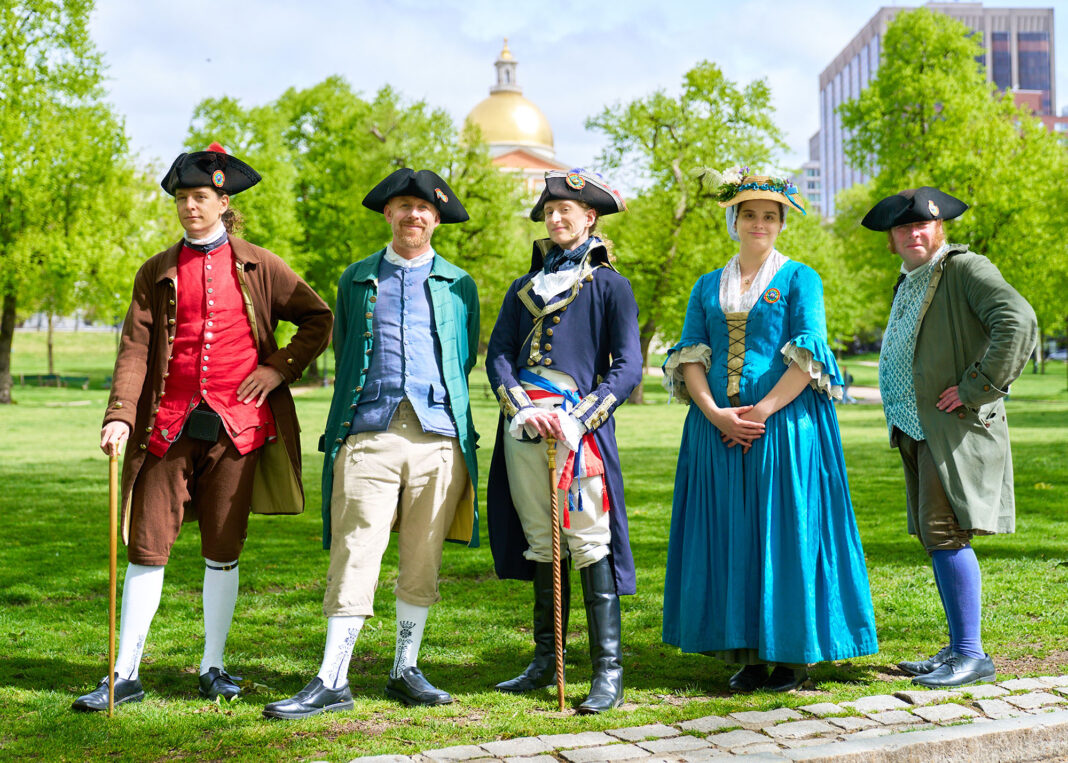
As Boston prepares for the nation’s 250th anniversary, the Freedom Trail Foundation’s Rainbow Revolutionaries Tours is adding a new story that bridges Revolutionary history and queer history in a compelling way: the story of George Middleton.
Middleton was a free Black man in 18th-century Boston who led an all-Black militia known as the Bucks of America during the Revolutionary War. Historians know relatively little about him, but surviving records show that the militia played a role in protecting Boston during the Revolutionary era. At the end of the war, Governor John Hancock presented the Bucks of America with a ceremonial flag, which is still preserved today in the collections of the Massachusetts Historical Society.
Middleton’s significance extends far beyond his military service. He later built a home on Beacon Hill with another man, Louis Glapion, and the two lived together there for the rest of their lives. While both men also married women, their long partnership has led some historians to consider the possibility that their relationship may have been romantic.
“There’s a lot of theorization that the two men were in a relationship with each other but that they might have been married for self-preservation, which is not atypical of queer people in these time periods,” says Catherine Benjamin, program manager of the Freedom Trail Foundation. “With lot of these older stories, we have to take a look at people who lived outside society’s norms, outside of traditional relationship norms and gender norms, and then theorize about this in order to bring some of these stories to light without knowing how these people would have identified.”
Queer history on the Freedom Trail
The addition of Middleton reflects the broader mission of the Rainbow Revolutionaries Tours, which launched in 2024 and is now in its third season. The walking tour highlights LGBTQ-related stories connected to Boston’s historic sites and Revolutionary history.
Benjamin says the Foundation developed the tour because queer history is part of Boston’s history and deserves to be visible. “Queer history is a part of Boston’s history, just like all the other stories that we’re sharing, and we want everybody who comes to visit to feel that their stories are represented,” she says. “The stories of LGBTQ people can be harder to hear about, harder to find and harder to know about, so it’s great to bring these stories to light to prevent the erasure of this history.”
Research for the tour drew on the work of local historians and organizations, including Queer History Boston (formerly, The History Project), whose book Improper Bostonians helped identify many of the figures included on the tour.
Benjamin also notes that some federal resources on queer interpretations of history that were available during the tour’s development in 2024 have since been removed or revised, making research efforts even more important.
Public response has been enthusiastic, and Benjamin described how tour participants are often surprised to learn that stories of queer lives can be found as far back as the 1700s and earlier. The tour also explores concepts such as the “Boston marriage,” a term that emerged in the 19th century to describe financially independent women living together.
The tour has continued to evolve as guides contribute their own research. One newer story involves Thomasine Hall, also known as Thomas Hall, a 17th-century figure who lived at different times as both Thomasine and Thomas, and who entered military service while presenting as male. The story is often discussed as an early example of someone who may have lived outside of traditional gender categories.
As the United States experiences its semi-quincentennial in 2026, Boston is experiencing renewed interest in Revolutionary history. Benjamin says the Rainbow Revolutionaries Tours are benefitting from that increased tourism. “There’s lots of places where you can hear about the revolutionary history of Boston right now, but there are fewer places where you can hear about its queer history,” Benjamin says.
By placing figures such as George Middleton alongside the city’s better-known historical figures, the Freedom Trail Foundation is expanding the story of who helped shape Boston and whose lives are remembered as part of its history. n